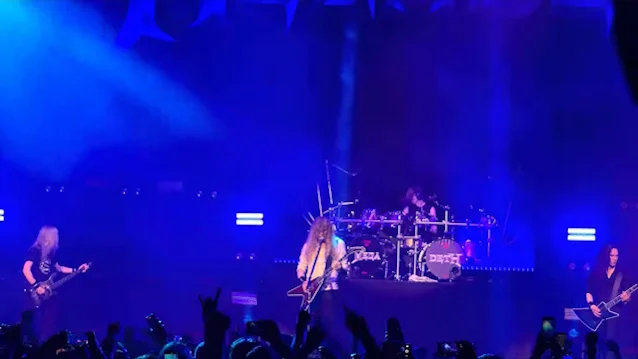
Thrash metal history collided with the present in a powerful way this week, as Megadeth debuted its long-awaited rendition of Ride the Lightning live on stage for the very first time.
The landmark performance took place on April 26, 2026, during the band’s headlining show at Bogotá’s Movistar Arena, where fans witnessed a rare full-circle moment tied to one of metal’s most storied rivalries.
A Historic Live Debut
Fan-filmed footage circulating online captures frontman Dave Mustaine and his band delivering a faithful yet heavier take on the iconic track, originally released by Metallica in 1984. The Bogotá performance marked the first time Megadeth has ever played the song live, despite Mustaine’s deep personal connection to it.
The song appeared late in the setlist, sandwiched between classics like “Mechanix” and “Peace Sells,” drawing a huge reaction from the crowd as the unmistakable opening riff rang out.
Closing The Circle
The significance of the moment goes far beyond a simple cover. Mustaine co-wrote “Ride The Lightning” during his early tenure with Metallica before his departure in 1983, making this performance a symbolic return to his musical roots.
In recent interviews, Mustaine explained that revisiting the track was about “closing the circle” and paying tribute to his former bandmates. He also noted that Megadeth’s version tweaks the original with a faster tempo and heavier drum accents while staying respectful to the source material.
From Studio To Stage
Megadeth first recorded their version of “Ride The Lightning” for their 2026 self-titled album, widely reported to be the band’s final studio release.
While the studio cut had already sparked conversation among fans, bringing the track to the stage adds a new layer of intensity and historical weight, especially given the long-standing narrative between Megadeth and Metallica.
A Rare Moment In Metal History
This performance also marks only the second time in Megadeth’s decades-long career that the band has played a Metallica song live, making the debut even more notable.
For fans in attendance, and those watching online, it was more than just a surprise addition to the setlist. It was a moment that bridged past and present, rivalry and respect, proving that even after four decades, the legacy of thrash metal’s “Big Four” continues to evolve.
Leave a Reply