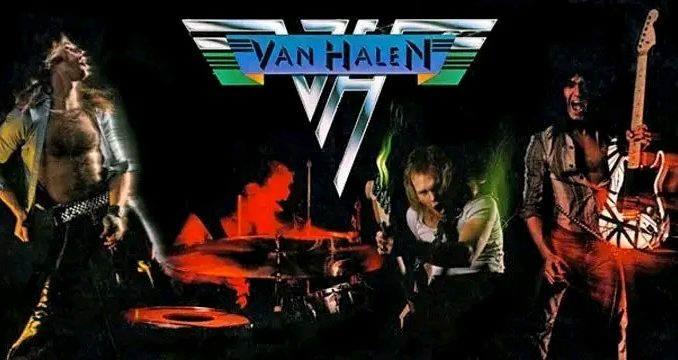
There are great debut albums, and then there are the ones that redraw the map entirely. When Van Halen released their self-titled debut, Van Halen, it didn’t just introduce a new band to the world, it delivered a shockwave that would ripple through rock music for decades.
As one fan famously put it: the moment the needle dropped, it was clear something had changed. Not gradually. Not subtly. Instantly.
At the center of that seismic shift was Eddie Van Halen. His playing on the album wasn’t just impressive, it was revolutionary. From the explosive opening of “Runnin’ with the Devil” to the now-legendary instrumental “Eruption,” Eddie’s guitar work redefined what the instrument could do in a hard rock context. Speed, precision, feel, and innovation all collided in a way that felt completely new.
“Eruption,” in particular, became a cultural flashpoint. Guitarists everywhere suddenly had a new benchmark, and, for many, an entirely new language to learn. Techniques like two-handed tapping, which Eddie brought into the mainstream, quickly spread across the rock and metal scenes, inspiring a generation of players to rethink their approach.
But the album’s impact wasn’t just technical. It had attitude. With David Lee Roth delivering charismatic, swagger-filled vocals and the band locking into a tight, high-energy groove, Van Halen felt alive in a way few records did at the time. It was raw yet polished, flashy yet grounded in groove.
In an era dominated by established acts, this debut sounded like a line in the sand. It didn’t ask for permission, it simply arrived and took over. For many listeners, that first spin wasn’t just memorable, it was transformative.
Decades later, the sentiment still holds true: you drop the needle, and within seconds, you know. This isn’t just another album.
This changes everything.
Leave a Reply