
Few musicians in rock history have earned universal reverence from their peers, but there is one figure Robert Plant and Jimmy Page have both spoken about with unmistakable awe. In their eyes, he wasn’t just influential, he was a visionary genius, a singular talent who reshaped what popular music could be and inspired generations that followed.
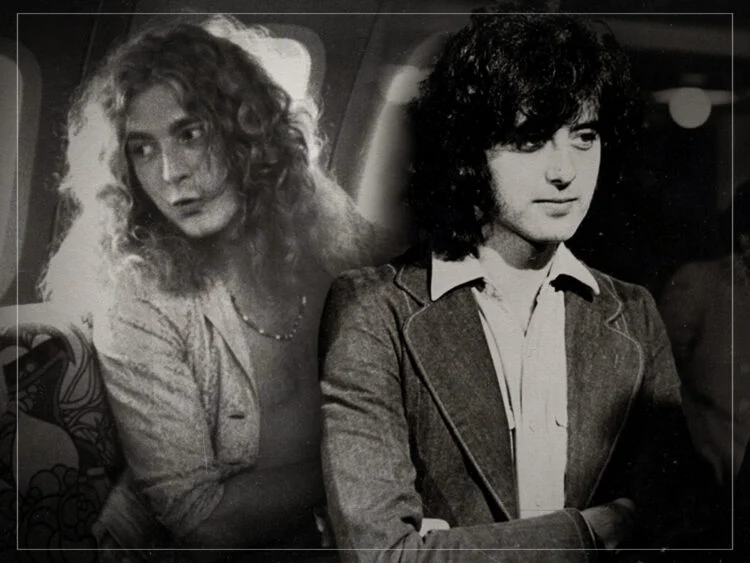
For Led Zeppelin’s frontman and guitarist, greatness was never about technical flash alone. It was about imagination, originality, and the courage to bend reality through sound. That is precisely why both men repeatedly pointed to David Bowie as the artist who stood above the rest.
A Genius Beyond Categories
David Bowie defied definition. Over a career that spanned five decades, he continuously reinvented himself, musically, visually, and philosophically. From the alien glam-rock prophet Ziggy Stardust to the soul-infused grooves of Young Americans, the fractured art-rock of Low, and the dark intensity of Blackstar, Bowie treated reinvention not as a risk but as an artistic necessity.
Robert Plant admired Bowie’s refusal to stand still. While Plant himself pushed Zeppelin beyond blues-rock into folk, mysticism, and world-music textures, Bowie went even further, treating each album as a new universe. Plant once praised Bowie’s fearlessness, noting that he never chased trends; he created them.
Jimmy Page On Bowie’s Vision
Jimmy Page, a master architect of sound and atmosphere, was equally struck by Bowie’s imagination. Page has described Bowie as a “visionary genius,” someone who understood that music was only one part of a much larger artistic statement. Image, narrative, emotion, and sonic experimentation all mattered equally, and Bowie fused them seamlessly.
Before superstardom, Bowie and Page moved within the same creative circles in 1960s London. Page watched firsthand as Bowie evolved from a struggling songwriter into a cultural force. What impressed Page most was Bowie’s ability to anticipate the future, to hear sounds and ideas before the rest of the world caught up.
Influence That Reached Every Corner Of Rock
Bowie’s influence on Led Zeppelin was not direct in a musical sense, but it was philosophical. Zeppelin pushed boundaries in length, volume, and mythology; Bowie pushed them in identity, storytelling, and self-expression. Both approaches required vision, and Bowie embodied that quality to an extraordinary degree.
For Plant, Bowie showed that a singer could be a shapeshifter, not just a voice but a character and a storyteller. For Page, Bowie proved that innovation didn’t require abandoning melody, it required imagination.
A Legacy Untouched By Time
What makes Bowie’s genius endure is not nostalgia but relevance. Long after his passing, his work still feels forward-thinking, still sounds like it belongs to tomorrow rather than yesterday. That timelessness is what Plant and Page recognized: Bowie wasn’t simply great in his era, he existed beyond eras altogether.
When two of rock’s most influential figures agree on someone’s greatness, it carries enormous weight. And when both Robert Plant and Jimmy Page use the same words, visionary genius, it becomes clear that David Bowie wasn’t just admired by his peers.
He was, and remains, one of the greatest artists rock music has ever produced.
Leave a Reply