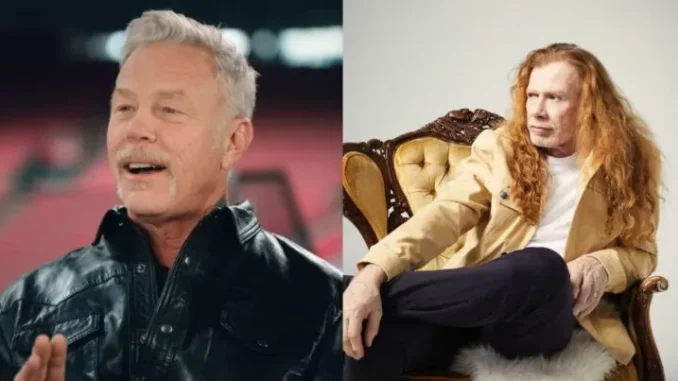
Few relationships in heavy metal history are as complex, combustible, and ultimately influential as the one between Metallica and Megadeth. At the center of that story stands James Hetfield, Metallica’s frontman and chief songwriter, whose views on Megadeth have evolved significantly over the decades, from early bitterness to hard-earned respect.
The Shadow Of The Early Days
Megadeth’s origins are inseparable from Metallica’s early lineup. Dave Mustaine’s departure from Metallica in 1983, followed by his creation of Megadeth, laid the groundwork for one of metal’s most talked-about rivalries. In Metallica’s formative years, Hetfield was young, competitive, and fiercely protective of his band. Unsurprisingly, there was tension, resentment, and a sense of unfinished business.
Hetfield has openly acknowledged that the early animosity was real. At the time, Megadeth felt less like a peer and more like a constant reminder of internal conflict and chaos from Metallica’s past. For years, both camps traded barbs, fueling a narrative of rivalry that fans eagerly consumed.
Musical Differences, Not Denial
Despite the personal friction, Hetfield has never dismissed Megadeth’s musical ability. While Metallica leaned into groove, weight, and songcraft, Megadeth carved out a reputation for technical precision, speed, and sharp-edged aggression. Hetfield has recognized that distinction, often framing the difference as two bands taking metal in separate but equally legitimate directions.
Rather than downplaying Megadeth’s success, Hetfield has acknowledged that Mustaine’s band built a powerful identity of its own, one that resonated deeply with fans who craved technical thrash and biting political commentary.
Maturity And Perspective
As the years passed, Hetfield’s perspective softened. With sobriety, age, and decades of success came reflection. He has spoken about letting go of old grudges and understanding how rivalry, while painful at times, pushed both bands to be better.
From Hetfield’s point of view, Megadeth’s existence wasn’t just a footnote in Metallica’s story, it was part of the wider thrash metal movement that helped elevate the genre to global prominence. The competition sharpened instincts, raised standards, and forced everyone involved to step up.
Public Reconciliation And Mutual Respect
Perhaps the clearest signal of Hetfield’s evolved opinion came with Metallica and Megadeth sharing the stage during the “Big Four” concerts alongside Slayer and Anthrax. What once seemed impossible became reality: former rivals standing shoulder to shoulder, celebrating a shared legacy.
Hetfield has since expressed respect for what Megadeth achieved and for Dave Mustaine’s resilience and drive. While the relationship may never be warm and sentimental, it is rooted in mutual acknowledgment of impact, influence, and survival in one of music’s most demanding genres.
A Rivalry That Built Metal
James Hetfield’s opinion on Megadeth ultimately reflects growth. What began as resentment transformed into recognition. In Hetfield’s eyes, Megadeth is no longer a symbol of old wounds but a vital chapter in thrash metal history, a band that challenged Metallica, pushed boundaries, and helped define an era.
In the end, that rivalry didn’t weaken metal. It strengthened it. And Hetfield knows it.
Leave a Reply