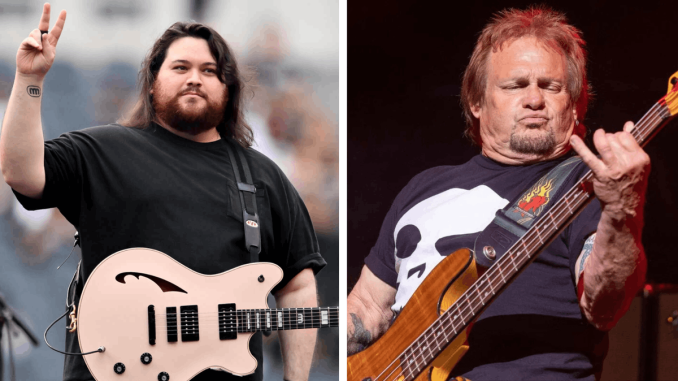
When Wolfgang Van Halen stepped into Van Halen’s lineup in 2007 at just sixteen years old, the world saw a proud father bringing his son onstage. What the world didn’t see was the pressure, insecurity, and emotional weight Wolfgang carried as he took on one of the most scrutinized roles in rock history: performing the bass and vocal parts originally delivered by Michael Anthony.
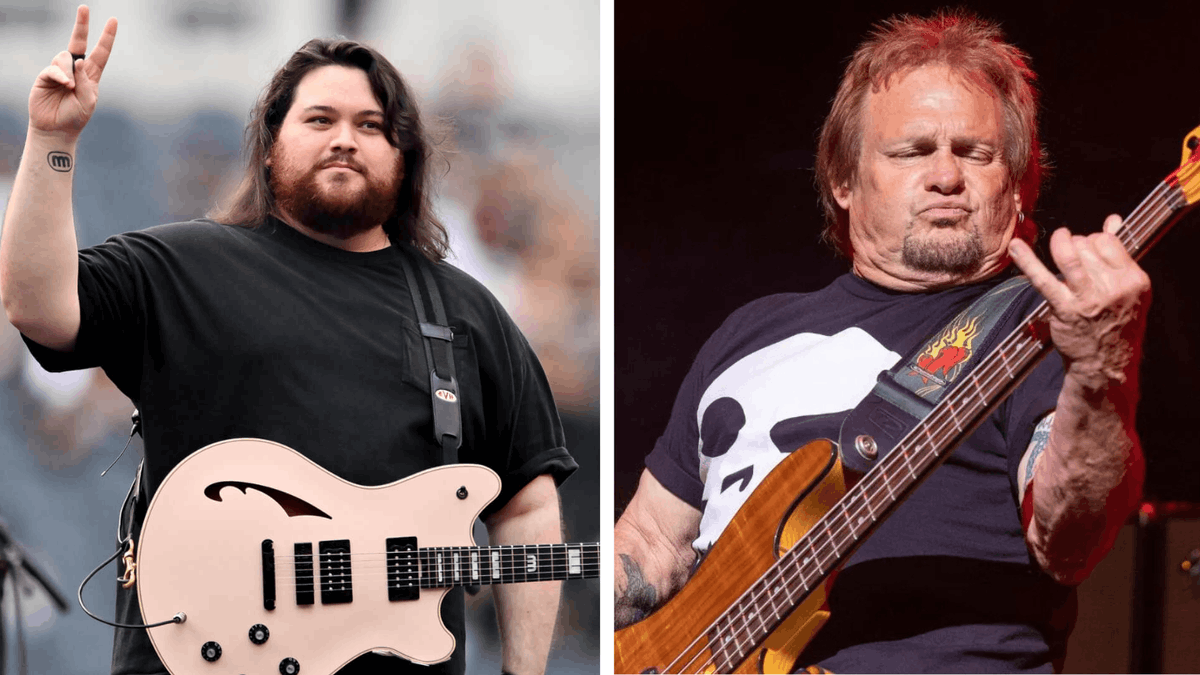
Years later, reflecting on the experience, Wolfgang revealed a truth that cuts deeper than any external criticism:
“I don’t have much faith in myself to begin with.”
And stepping into Anthony’s shoes—beloved by fans and integral to Van Halen’s sound, intensified that inner battle in ways he could never have anticipated.
An Impossible Standard: The Shadow Of Michael Anthony
Michael Anthony’s harmonies are legendary. His bright, soaring high-register vocals provided a signature element of the Van Halen sound from the very beginning. His bass parts, more subtle but no less essential, offered sturdy foundations beneath Eddie’s explosive guitar work.
Replacing a figure with such iconic contributions wasn’t just difficult, it was borderline unwinnable from a public perspective.
Wolfgang understood this immediately.
He wasn’t entering a blank canvas. He was stepping into a role embedded in millions of fans’ memories, expectations, and emotions. And for someone already prone to self-doubt, the comparison was relentless, internally and externally.
The Weight of Legacy And The Fear Of Letting His Father Down
Onstage, Wolfgang had to perform flawlessly. Offstage, he was carrying something heavier:
the pressure to uphold the Van Halen legacy, not just musically, but as the son of its most celebrated member.
That dual responsibility shaped his mindset during those years. He wasn’t just trying to perform well, he was trying to avoid being the weak link in a band where every member had been mythologized.
For someone who admitted he struggled with confidence, the stakes were almost paralyzing.
Finding His Own Sound By First Honoring Someone Else’s
The experience, though difficult, became formative.
Performing Anthony’s harmonies helped Wolfgang sharpen his ear, precision, and versatility. Holding down the low end while matching some of the band’s most recognizable vocal lines taught him discipline, restraint, and technical maturity beyond his years.
And the criticism fair or unfair, thickened his skin, pushing him to develop a resilience that would later become essential when launching his own band, Mammoth WVH.
What was once a source of anxiety ultimately became a training ground.
When Insecurity Became Fuel
Wolfgang’s admission, “I don’t have much faith in myself to begin with” reveals the emotional cost of those early years. But it also explains something deeper:
His success today exists in spite of, and partly because of, that insecurity.
Writing, recording, and performing every instrument on mammoth WVH’s debut album wasn’t just a creative choice, it was a reclaiming of self-worth after years of being measured against others.
Where Van Halen forced him to prove himself under a microscope, Mammoth allows him to define himself on his own terms.
A Legacy Reframed
Michael Anthony’s parts were never easy to replicate. They weren’t meant to be.
But Wolfgang’s journey through that trial shaped him into the artist he is now:
- intensely disciplined
- painfully honest
- emotionally grounded
- and fiercely determined to carve out his own identity
Performing in Van Halen didn’t just challenge his confidence, it forged it.
And that makes his evolution from a nervous teenager in his father’s band to a Grammy-nominated multi-instrumentalist one of the most compelling stories in modern rock.
Leave a Reply