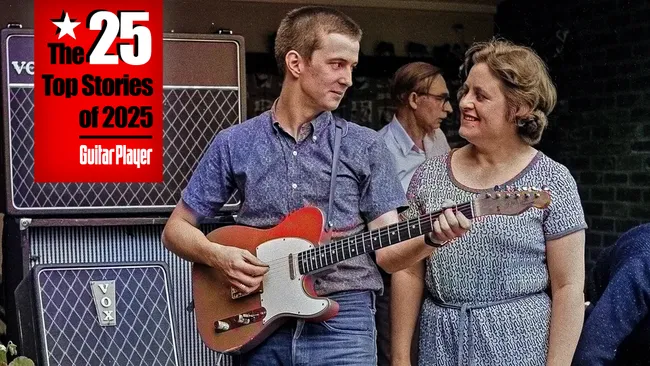
Before Eric Clapton became one of the most celebrated guitarists in rock history, his time with the Yardbirds was marked not by swagger or excess, but by restlessness and quiet frustration. In a revealing recollection, Yardbirds drummer Jim McCarty has spoken candidly about Clapton’s emotional state during his brief but influential tenure with the band—describing a young musician who often seemed isolated, withdrawn, and “quite unhappy.”
“He was a very moody sort of guy,” McCarty recalled. “We’d be traveling in a van, going to the shows, and he would sit in the corner and not talk to anybody.”
At the time, the Yardbirds were rapidly rising stars on the British blues-rock circuit, blending Chicago blues influences with a more pop-oriented approach that appealed to a widening audience. Clapton, however, was a devoted blues purist. Deeply inspired by artists like Muddy Waters, Freddie King, and B.B. King, he wanted the band to stay rooted in traditional blues, an artistic stance that increasingly put him at odds with the group’s evolving direction.
That creative tension took a toll. While the Yardbirds were chasing chart success and experimenting with a broader sound, Clapton reportedly felt alienated and creatively constrained. McCarty’s memories paint a picture of a young guitarist wrestling internally with his identity and purpose, even as he was helping shape the sound of one of Britain’s most important bands.
Clapton’s discomfort ultimately came to a head in 1965, when the Yardbirds released the pop-leaning hit “For Your Love.” The song became a commercial breakthrough, but it was also the breaking point for Clapton. Unhappy with the band’s move away from pure blues, he chose to leave, walking away from fame in favor of artistic integrity.
In hindsight, that moody, silent figure in the corner of the van was already on the path toward something bigger. Clapton soon joined John Mayall & the Bluesbreakers, where his fiery playing earned him the now-legendary nickname “Slowhand” and sparked the famous graffiti: “Clapton is God.” From there, his journey would lead to Cream, Blind Faith, Derek and the Dominos, and a solo career that cemented his place in music history.
McCarty’s reflection offers a rare, human glimpse of Clapton before the myth fully formed, a reminder that even the greatest legends pass through moments of doubt and dissatisfaction. For Clapton, his “quite unhappy” time with the Yardbirds wasn’t a failure, but a necessary step toward becoming the artist he was meant to be.
Leave a Reply