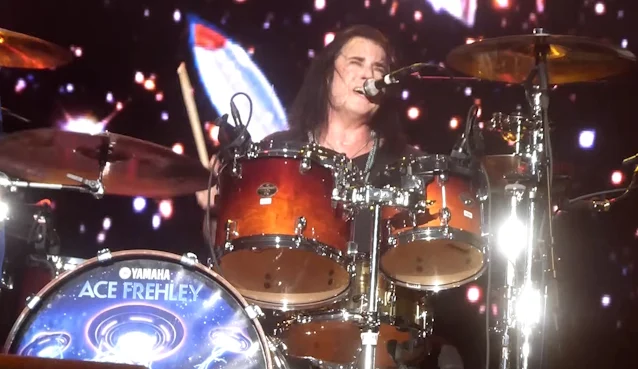
In an era where legacy branding and posthumous tributes often blur the line between homage and commercialization, longtime Ace Frehley collaborator Scot Coogan is making his stance crystal clear. The drummer and vocalist, who has spent years performing alongside Ace Frehley, recently addressed speculation surrounding the legacy of the late KISS icon, and his message was one of firm principle.
Speaking candidly in a recent interview, Coogan emphasized that he has “no interest” in profiting from the name, likeness, or legacy of Frehley, distancing himself from the growing trend of posthumous monetization in the music industry. While rumors and discussions have circulated about how Frehley’s legacy might be handled in the years to come, Coogan made it clear that his priorities lie elsewhere.
“I’m not here to capitalize on anything like that,” Coogan explained. “What matters to me is the music we made and the connection we had on stage. That’s something money can’t replicate.”
Coogan’s comments strike a chord at a time when the estates of legendary musicians frequently explore new revenue streams, ranging from hologram tours to licensing deals and branded merchandise. For many fans, these efforts offer a way to keep the spirit of their idols alive. But for artists like Coogan, the approach can feel at odds with the authenticity that defined those musicians in the first place.
Having worked closely with Frehley for years, Coogan occupies a unique position. He’s not just a hired hand but a trusted collaborator who helped bring the former KISS guitarist’s solo material to life on stage. That experience, he says, carries a responsibility to honor the music rather than exploit it.
“I think the best way to respect someone’s legacy is to play the songs with heart and honesty,” he added. “That’s what fans connect with, not a brand or a logo.”
Frehley, best known as the original lead guitarist of KISS and the band’s “Spaceman” persona, remains one of the most influential figures in hard rock history. His signature sound and larger-than-life image helped define an era, inspiring generations of guitarists and fans alike.
Coogan’s refusal to engage in legacy profiteering underscores a broader debate within the rock community: how to preserve the spirit of legendary artists in a modern industry driven by content and commerce. While some see value in expanding a legacy through new ventures, others, like Coogan, believe the truest tribute lies in the music itself.
As fans continue to celebrate Frehley’s contributions to rock, Coogan’s words serve as a reminder that not every legacy needs to be monetized to endure. Sometimes, the most powerful way to honor a legend is simply to keep the music alive, on stage, in memory, and in the hearts of those who were there to witness it.
Leave a Reply