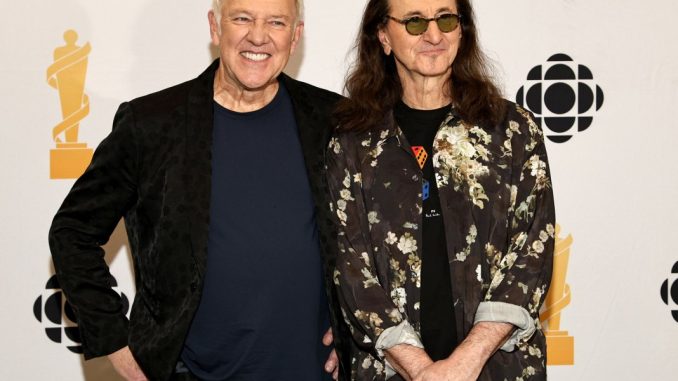
For decades, Rush stood as one of rock’s most technically brilliant and fiercely independent forces. But as talk of a reunion tour began to take shape, even the band’s surviving core, Alex Lifeson and Geddy Lee, weren’t entirely convinced it was a good idea.
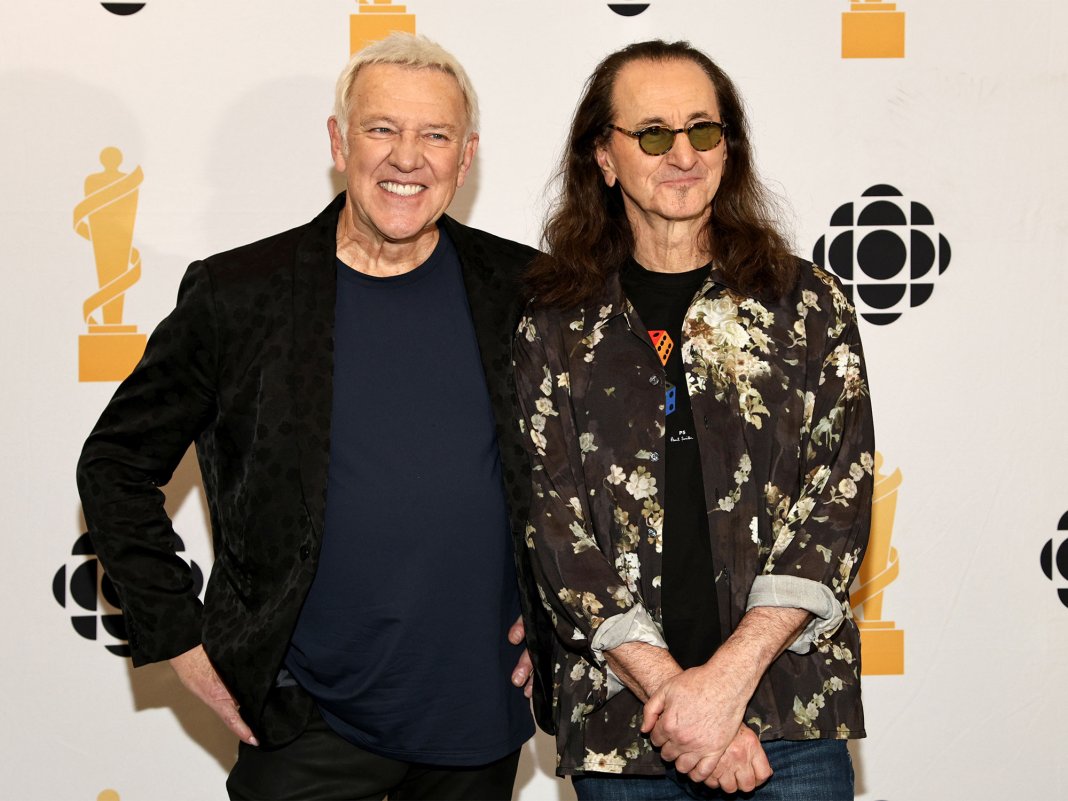
In fact, Lifeson didn’t mince words when describing the concept of stepping back onto a stage under the Rush banner: “It’s a supremely stupid idea,” he admitted with a mix of humor and honesty. Yet beneath the sarcasm lies something far deeper, an emotional weight that neither musician can ignore.
The planned reunion tour marks a powerful, complicated moment for the band, coming years after the passing of legendary drummer Neil Peart in 2020. Peart’s absence looms large over any attempt to revive Rush, a band whose identity was inseparable from his intricate playing and philosophical lyricism.
For Lee, the emotional stakes are just as high. “We’re going to be so emotional,” he said when looking ahead to the opening night. It’s not just another gig, it’s a reckoning with the past, a tribute to a fallen brother, and a confrontation with what Rush means without one of its essential pillars.
Despite their reservations, both musicians have acknowledged the undeniable pull of their shared legacy. Over the years, they’ve maintained that Rush ended with Peart, making any return feel almost contradictory. Yet the bond between Lifeson and Lee, and the enduring connection with fans, has created a space where the impossible now feels worth exploring.
The biggest question surrounding the tour is how the band will approach Peart’s role. Rather than attempting the impossible task of replacing him, sources close to the project suggest the performances will lean into celebration rather than replication, honoring the music and spirit of Rush without pretending it can ever be the same.
That balance, between reverence and reinvention, is at the heart of Lifeson’s conflicted feelings. Calling the idea “stupid” isn’t dismissal; it’s an acknowledgment of how sacred Rush’s legacy is, and how risky it is to revisit it.
Still, for fans who have waited years for even a glimpse of a reunion, the prospect is nothing short of monumental. The opening show is expected to be charged with emotion, not just for the band but for an audience that has grown up with Rush’s music as a soundtrack to their lives.
In the end, Lifeson and Lee aren’t chasing nostalgia, they’re navigating grief, legacy, and the enduring power of connection. If the idea feels “supremely stupid,” it’s only because it matters so much.
And when the lights go down on opening night, logic will likely give way to something far more powerful: the sound of two lifelong musicians honoring the past, together, one more time.
Leave a Reply