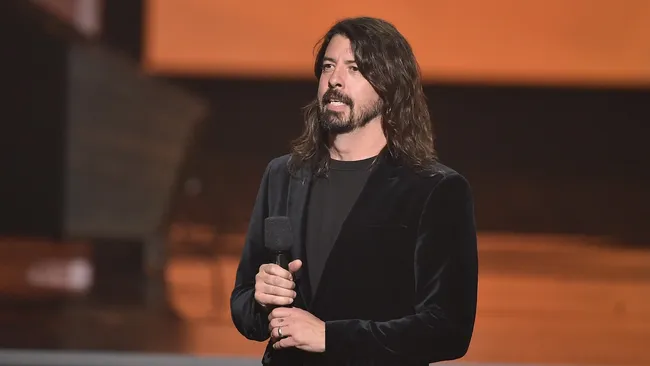
How Dave Grohl Channelled Devastating Loss Into One of Foo Fighters’ Most Raw, Emotional Songs. Grief doesn’t always arrive loudly. Sometimes it slips in quietly, through memory, through dreams, through the unbearable normality of absence. For Dave Grohl, loss became something he could neither outrun nor rationalize, only feel. And in that space between heartbreak and healing, he wrote one of the most emotionally naked songs in the Foo Fighters’ catalog.
“When I see him in my dreams, he hasn’t changed a bit. He is still my best friend.” It’s a line that cuts straight to the bone, because it speaks to a universal truth about grief: the people we lose never really leave us. They remain frozen in time, vivid and familiar, untouched by the years we’re forced to keep living without them.
Music As Survival, Not Therapy
Grohl has never framed songwriting as therapy. For him, it’s survival. Throughout his career, from the ashes of Nirvana to the rise of Foo Fighters, music has been the place where unprocessed emotion finally finds a voice.
This particular song wasn’t written to be poetic or grand. It wasn’t designed for radio hooks or stadium singalongs. It was written because silence had become unbearable.
Rather than masking his pain behind distortion or bravado, Grohl leaned into restraint. The song breathes. It aches. Every note feels considered, almost hesitant, as if pushing too hard might shatter something fragile.
A Friendship That Never Ends
At the heart of the song is not just loss, but love. The kind forged through shared history, inside jokes, late nights, and unconditional understanding. When Grohl sings about seeing his friend in dreams unchanged, he’s acknowledging something profoundly human: death may end a life, but it doesn’t end a relationship.
In dreams, his friend still laughs the same way. Still stands the same way. Still feels present.
That tension, between knowing someone is gone and feeling them everywhere, is what gives the song its quiet devastation.
Vulnerability Without Protection
What makes the track so powerful isn’t just the lyrics, it’s Grohl’s willingness to leave them exposed. There’s no irony, no clever metaphor to soften the blow. His voice cracks not from technique, but from truth.
For a musician known for explosive energy and fist-pumping anthems, this moment of stillness feels radical. It’s Dave Grohl without armor.
Fans felt it immediately.
Many listeners have said the song helped them grieve losses of their own, friends, parents, siblings, because it didn’t tell them how to heal. It simply sat with them in the pain.
Grief As A Creative Force
Grohl has experienced loss at multiple points in his life, but each time, his response has been the same: turn pain into sound. Not to glorify it, but to give it somewhere to go.
In this song, heartbreak isn’t resolved. There’s no tidy ending, no lesson neatly wrapped in hope. Instead, there’s acceptance, the understanding that grief becomes part of who you are, and that love continues, just in a different form.
Why The Song Endures
Years later, the song remains one of Foo Fighters’ most emotionally resonant works because it doesn’t age. Loss doesn’t age. Dreams don’t age. Best friends don’t age in our memories.
“When I see him in my dreams, he hasn’t changed a bit.”
It’s a sentence that could belong to anyone who has loved deeply and lost painfully. And in turning that sentence into music, Dave Grohl gave voice to something millions struggle to say out loud.
Sometimes the most powerful songs aren’t the loudest.
Sometimes they’re the ones that whisper the truth we’re all trying to survive.
Leave a Reply