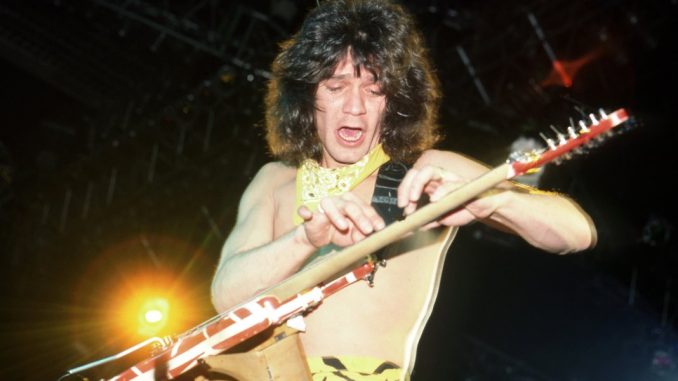
Eddie Van Halen didn’t just change the role of the electric guitar, he redefined what was possible. When Van Halen exploded onto the scene in the late 1970s, his playing sounded alien, joyful, aggressive, and melodic all at once. Yet Eddie never claimed to have invented his style in a vacuum. He was always open about the guitarists who inspired him, borrowing ideas, attitudes, and philosophies before transforming them into something entirely his own.
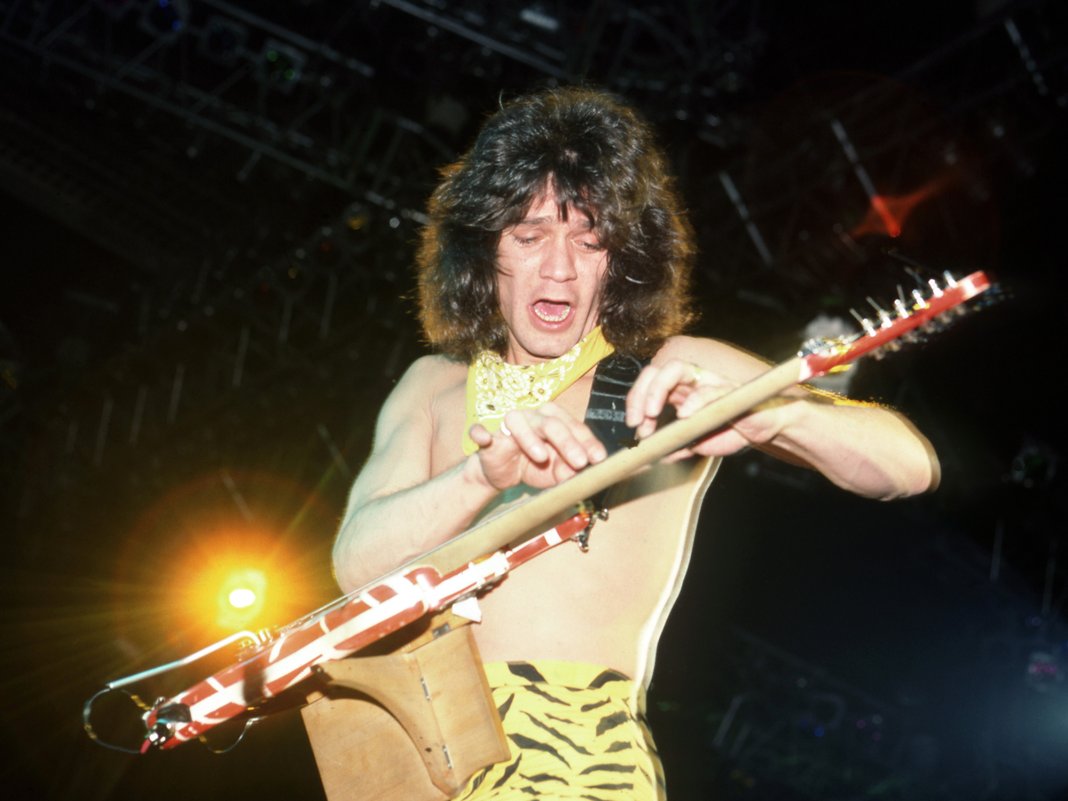
Here are the key guitar influences that shaped Eddie Van Halen, and how each left its mark on his legendary sound.
Eric Clapton – Tone, Feel, And The Power Of The Blues
One of Eddie’s earliest heroes was Eric Clapton, particularly during his Cream era. Clapton’s thick, vocal-like tone and expressive phrasing showed Eddie that emotion mattered more than speed. From Clapton, Eddie absorbed the idea that a guitar should sing, an approach clearly audible in his melodic soloing and wide, expressive vibrato.
Eddie often said that Clapton taught him how important touch and tone were, long before he chased technical innovation.
Jimmy Page – Riffs, Attitude, And Studio Magic
If Clapton shaped Eddie’s feel, Jimmy Page influenced his imagination. Page’s work with Led Zeppelin demonstrated how riffs could be monumental and how the studio could be used as an instrument. Eddie admired Page’s looseness, swagger, and ability to blend blues, folk, and hard rock into something cinematic.
Van Halen’s riff-driven classics owe a clear debt to Page’s philosophy: simple ideas played with confidence can sound enormous.
Tony Iommi – Weight, Darkness, And Simplicity
Eddie held Tony Iommi of Black Sabbath in especially high regard, once describing Sabbath as “closest to my heart.” What Eddie admired most was Iommi’s mastery of heaviness. The riffs were slow, deliberate, and crushing, proof that restraint could be just as powerful as complexity.
This influence surfaced in Eddie’s own chunky rhythm playing, where groove and weight often mattered more than flashy technique.
Ritchie Blackmore – Classical Fire And Precision
From Ritchie Blackmore of Deep Purple and Rainbow, Eddie absorbed a sense of drama and classical influence. Blackmore’s use of harmonic minor scales, aggressive picking, and medieval-flavored melodies helped shape Eddie’s more neo-classical tendencies.
This influence is evident in Eddie’s early solos, where structured phrasing meets explosive energy.
Allan Holdsworth – The Outsider Genius
Perhaps the most technically profound influence on Eddie was Allan Holdsworth. Eddie openly called Holdsworth his favorite guitarist and a musician “from another planet.” Holdsworth’s legato phrasing, unusual chord voicings, and fluid approach to harmony deeply affected Eddie’s thinking.
Although Eddie never copied Holdsworth directly, his two-handed tapping, wide interval jumps, and harmonic curiosity reflect Holdsworth’s fearless approach to the instrument.
Brian May – Melody And Orchestration
Brian May showed Eddie how guitars could be layered melodically to create orchestral depth. May’s harmonized leads and carefully crafted arrangements influenced Eddie’s use of multiple guitar tracks and his emphasis on memorable, singable lines, even within solos.
The Classical Composers – Bach And Mozart
Beyond rock guitarists, Eddie drew inspiration from classical music, particularly Bach and Mozart. He admired their sense of structure, tension, and release. This influence can be heard in Eddie’s symmetrical phrasing, rhythmic precision, and compositional approach to solos, which often feel like miniature pieces rather than improvised bursts.
Turning Influence Into Innovation
What made Eddie Van Halen extraordinary wasn’t just who he listened to, it was what he did with those influences. He combined Clapton’s feel, Page’s swagger, Iommi’s weight, Blackmore’s fire, Holdsworth’s sophistication, and classical discipline into a style that sounded completely new.
Add his relentless curiosity, from modifying amplifiers to inventing new techniques, and the result was a guitarist who didn’t follow the rules, because he was too busy rewriting them.
A Legacy Built On Listening
Eddie Van Halen’s guitar voice was revolutionary, but it was also deeply rooted in respect for the past. He listened obsessively, learned relentlessly, and then trusted his instincts.
That balance, honoring tradition while fearlessly pushing forward, is why Eddie’s influence now eclipses that of many of his heroes, and why generations of guitarists still chase the sound, spirit, and joy that defined his playing.
Leave a Reply