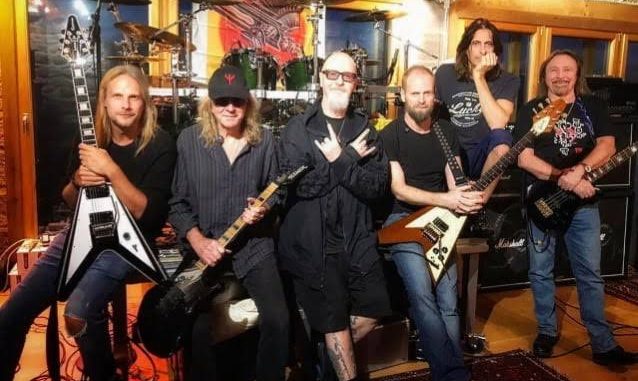
Few bands have shaped heavy metal as profoundly, and as consistently, as Judas Priest. Formed in Birmingham, England, in 1969, the band helped forge the blueprint for modern metal: twin-guitar attacks, soaring operatic vocals, leather-and-studs aesthetic, and thunderous riffs that became global anthems.
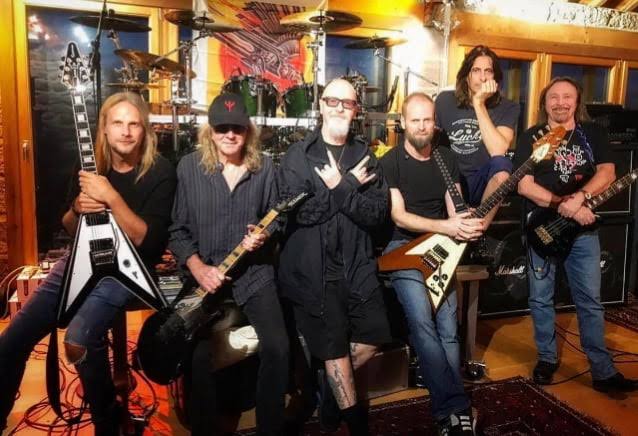
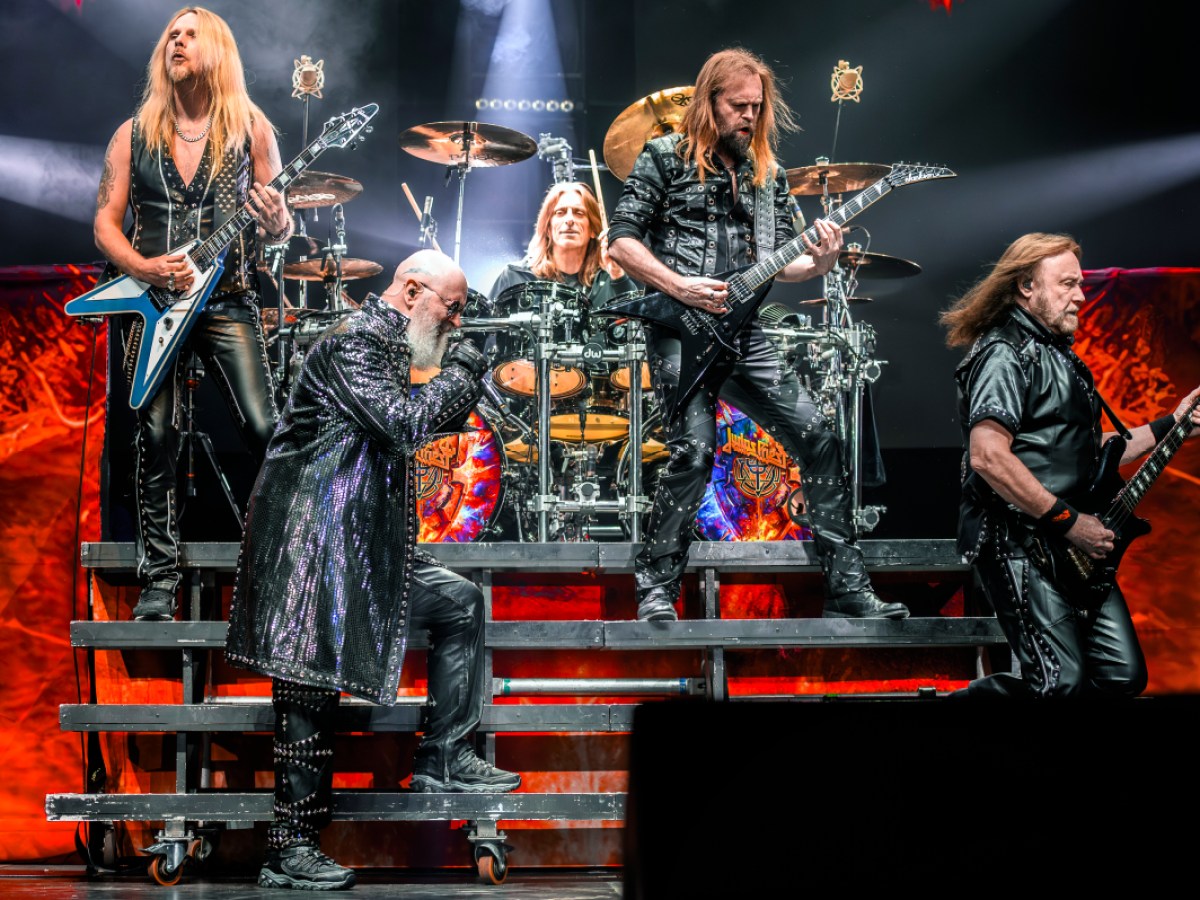
Across decades of evolution, lineup changes, and reinventions, Judas Priest has remained a relentless force. Below is a full look at the band’s classic, current, and historically significant members, and the crucial roles they played in forging metal’s iron identity.
Current Lineup (as of 2025)
Rob Halford – Lead Vocals
Known universally as the Metal God, Rob Halford is one of the most influential frontmen in music history.
His trademarks:
- A four-octave vocal range
- Operatic screams
- Charismatic stage presence
- The iconic entrance on a roaring motorcycle
Halford’s voice defined the sound of tracks like “Victim of Changes,” “Painkiller,” and “Electric Eye.” His impact on metal is immeasurable.
Ian Hill – Bass Guitar
A founding member and the band’s quiet anchor, Ian Hill has been holding down Judas Priest’s low-end since day one.
His role:
- Steady, supportive basslines
- Foundation of the dual-guitar harmonies
- Rhythm section’s backbone
Hill’s presence has given Priest unmatched sonic stability, even when other members rotated in and out.
Scott Travis – Drums
Joining in 1989, Scott Travis injected new fire and aggression into Priest’s rhythm section.
His contributions:
- Double-kick speed and precision
- Modernized, heavier drum sound
- The blistering opening of “Painkiller”, one of metal’s most iconic drum intros
Travis brought the band into its thrash-influenced era with power and finesse.
Richie Faulkner – Guitar
When he joined in 2011, Richie Faulkner revitalized Judas Priest with youthful energy and fiery virtuosity.
His role:
- Lead and rhythm guitar
- Songwriting contributions
- Modern metal guitar heroics
Faulkner co-penned several recent albums and evolved into one of the band’s most important creative forces.
Andy Sneap – Touring Guitarist
Primarily known as a producer, Andy Sneap stepped in as a touring guitarist beginning in 2018 to cover for Glenn Tipton.
Functions:
- Live rhythm and lead guitar
- Faithfully reproducing Tipton’s legendary parts
- Maintaining the classic twin-guitar dynamic onstage
Sneap has ensured the band continues performing at full power worldwide.
Legendary Past Members
K.K. Downing – Guitar (1969–2011)
A founding member and architect of Judas Priest’s guitar identity.
His role:
- Original twin-guitar innovator
- Creator of groundbreaking riffs (“Hell Bent for Leather,” “Heading Out to the Highway”)
- Pioneer of the metal guitar look and feel
Downing helped define the genre before departing in 2011.
Glenn Tipton – Guitar (1974–Present, limited live activity)
One of heavy metal’s most gifted guitarists and composers.
Functions:
- Dual-lead compositions with Downing
- Main songwriter for many Priest classics
- Signature melodic solos and harmonies
Although Parkinson’s disease limits his live performances, Tipton continues contributing creatively to Judas Priest albums.
Dave Holland – Drums (1979–1989)
Provided the steady, precise drumming behind major albums like “British Steel,” “Screaming for Vengeance,” and “Defenders of the Faith.”
His role:
- Solid, disciplined rhythm
- Contributing to the band’s most commercially successful period
Les Binks – Drums (1977–1979)
A highly technical drummer whose performance on “Stained Class” and “Killing Machine” helped Priest enter their classic era.
Tim “Ripper” Owens – Vocals (1996–2003)
Replaced Halford during his hiatus and delivered powerful vocals on “Jugulator” and “Demolition.”
His role:
- Maintaining the band’s intensity during a transitional period
Other Early Members
- Al Atkins – Vocals (1969–1973) – Original singer before Halford.
- John Hinch – Drums (1973–1975) – Played on their debut “Rocka Rolla.”
- Alan Moore – Drums (1975–1977) – Contributed to “Sad Wings of Destiny.”
- Various early guitarists and bassists from the pre-fame era.
A Band That Defined Heavy Metal
Judas Priest’s legacy is built on both stability and evolution: a powerful rhythm section, unparalleled vocals, and the twin-guitar system that influenced generations.
From their 1970s breakthrough to their modern resurgence, each member, past and present, played a critical role in crafting a sound that will forever define the heavy metal genre.
Leave a Reply